Anglemog/Folkmog October Weekend – Sidmouth – 4 – 8 October
David Waite – MSCC 11206
“The October Weekend” has been a feature of our Anglemog calendar since the very early days, with the intention of visiting as many parts of the country within reasonable reach of East Anglia as possible for a 3 – 4 day break.
Simon Daunt took the lead in organising this (again) in 2025. He and several other Anglemoggers are also affiliated to Folkmog so we were delighted that several of that merry crowd could join us, we were particularly pleased to welcome new Anglemoggers Tony and Tina McClarnon for the first time.
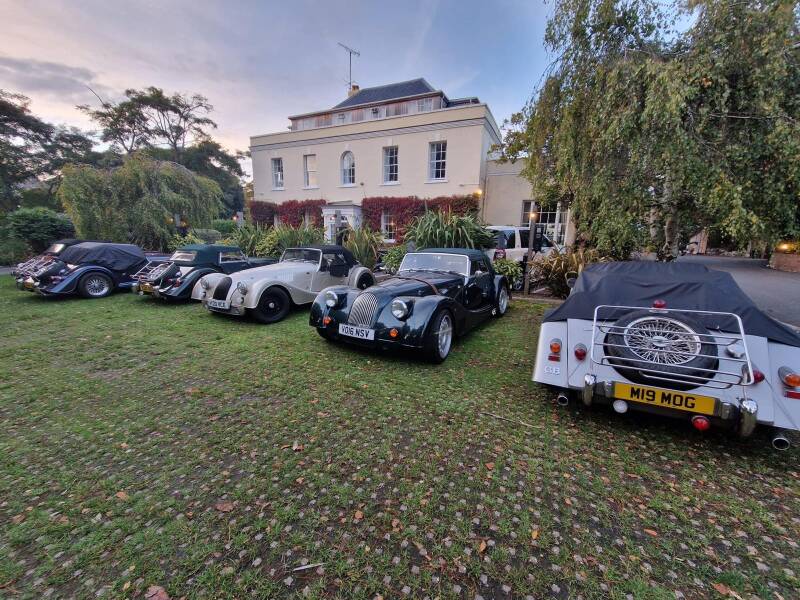
This resulted in 22 Mogs and a couple of tin tops descending on the Hunters Moon Hotel in Sidmouth, a privately owned hotel in an early Georgian residence which proved to be an excellent choice. The rooms were well appointed and the staff and food both first class.
The Mogs were distributed amongst four parking areas, all immediately adjacent to the Hotel. This precluded the usually mandatory photograph of all the participants lined up with their cars, bravely smiling whilst the photographer(s) struggled to fit them all into one shot, with everyone wishing they’d hurry up so they can hit the bar.
The last time Pat and I had been to Sidmouth was earlier in the year, to attend a funeral, so we were delighted to visit this charming place again under more enjoyable circumstances.
Sidmouth is a seaside town on the Jurassic coast, apparently boasting (if that’s the right word!) a higher percentage of 90+ year olds than anywhere else in the country. This may explain why the town centre remains vibrant, with many individual shops still trading, and even a department store. (Do you remember them?)
We followed the usual format whereby the organiser provides details of recommended places to visit but everyone is at liberty to do their own thing. The only request is that we meet up in the bar for dinner at the end of the day to share our individual experiences and discuss the next day’s plans.
On the first day some took the opportunity to have a non-drive it day and explore Sidmouth and the promenade, especially as the weather was so glorious. On the Tuesday members went in different directions to explore the local attractions. These ranged from the Seaton Tramway to Bicton Park Botanical Gardens to Buckfast Abbey. A few members travelled home on Wednesday morning.
For those that stayed an extra day, Simon had organised a two-site programme which the majority of us signed up for, and what a great decision that was.
The first venue was Beer Quarry Caves (the village, not the alcoholic drink, they haven’t figured out to mine this yet) where we enjoyed a fascinating tour with a well informed and amusing guide. He explained that site was first mined – or quarried - by the Romans, about 2,000 years ago, followed by the Saxons, Normans, Tudors and so on until the last stone was extracted in the early 1920’s.
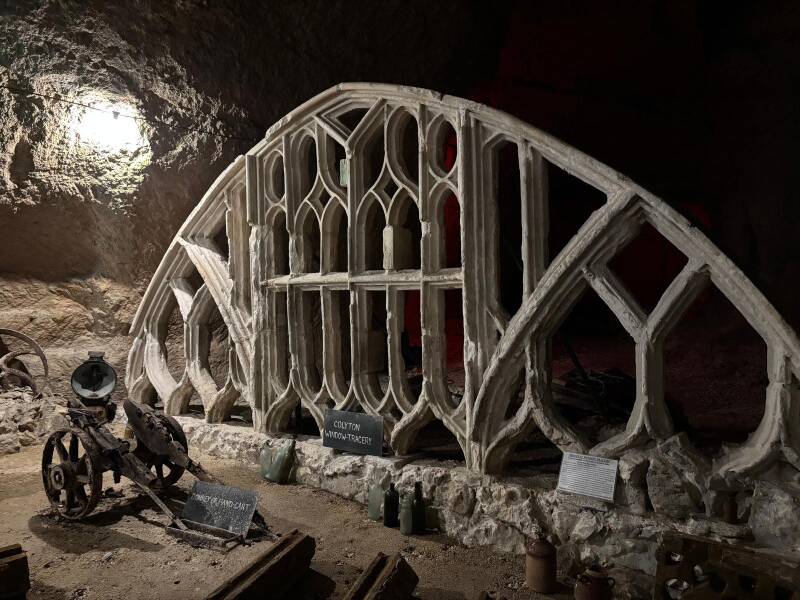
The caves do not feature the tunnels you would expect in a typical mine but large chambers, often called underground cathedrals, with vaulted roofs, pillars and side galleries. Photograph 1 shows a typical area – our guide explained that this would have taken more than 1,000 years to work.
The target limestone was highly favoured being easy to work when freshly cut, then hardening gradually with time. This made it particularly suitable for use in numerous local churches and further afield including St Paul’s, Exeter and Winchester Cathedrals, Westminster Abbey and Hall, the Tower of London and London Bridge.
You enter through the first Roman chamber, with rounded arches, and continue through the Saxon, Norman and Tudor areas, with square arches.
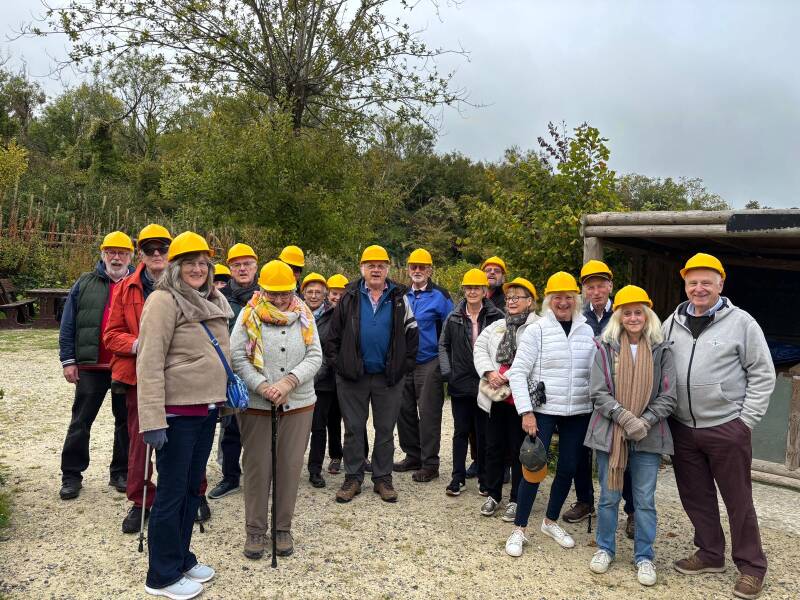
The tour continued until we reached the end of the mine where the last blocks were taken in the 1920’s. A few part-worked blocks remain from which you can see how they were cut using saws, pickaxes, hammers and wedges. Photograph 2 shows our motley crew assembled here, note the part worked slab on the left, now upcycled as a seat.
The advent of “black powder” made life slightly easier but was of limited use because of the need for accurate extraction of the blocks.
Black streaks on the walls from tallow candles show where the masons worked, finishing the blocks in what must have been very poor working conditions to form concise rectangles, typically weighing 4 T each but up to 26 T, to be handled and extracted using only human labour and horse power.
One chamber was used as a Catholic chapel during periods of persecution: weddings and concerts can still be held in these unique surroundings.
The workings are so extensive that one individual is said to have been lost in the mine for four days when he ran out of candles. This led to calls for the two entrances to be dynamited to close the caves permanently which was only prevented by the intervention of a far-sighted local individual who saved them for posterity.
We don’t think we left anyone down there. If we did, they haven’t been missed yet.
We then proceeded to the nearby Pecorama. Not being a model railway enthusiast, the significance of this name was lost on me until it dawned that this is a miniature railway, with gardens and the inevitable tea rooms, located immediately adjacent to Peco’s model railway factory and exhibition.
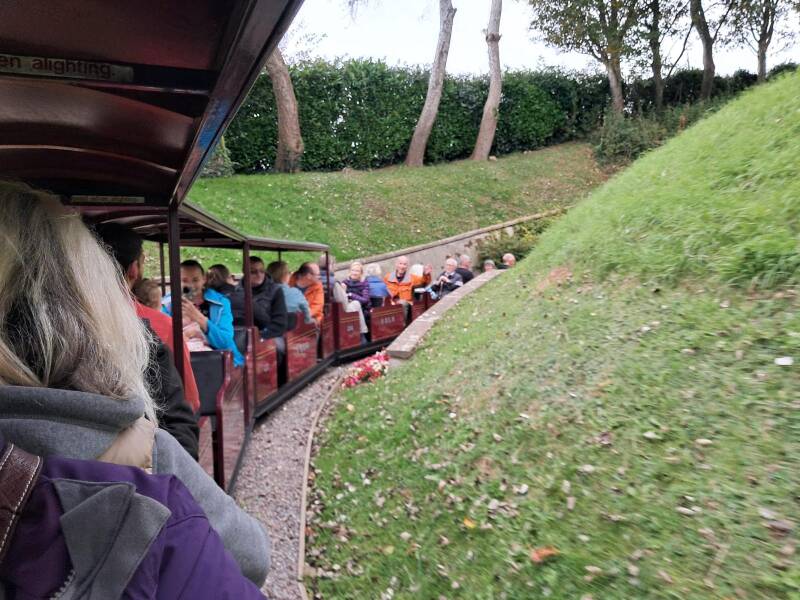
A ride on the model railway was enjoyed by many of us, perched slightly uncomfortably on the miniature carriages. It’s a good job there remain the vestiges of a child in most of us, or in me at least. The model railway layouts in the adjacent Peco exhibition are excellent, with numerous realistic miniature landscape features, buildings, people, animals and vehicles which – you’ve guessed it – can all be purchased (for a price!) in the adjacent shop.
We returned to the Hunters Moon for a last excellent meal before making our various ways home.
This was an excellent short holiday, which we heartily recommend to other Centres.
Our thanks go to Simon Daunt, ably assisted by Nigel Bull, and their respective Leaders of the Opposition for organising this.


Add comment
Comments